Rank in AI

Discover the AI shift in SEO. Learn how to get ranked in AI search engines like ChatGPT and Gemini, and master the new landscape of answer engine optimization.
So, you've probably heard all the buzz about AI chatbots like ChatGPT, Gemini, and Claude. They're everywhere now, right? Well, traditional SEO folks might not be too keen on telling you this, but these AI tools are changing the game, big time. It's not just about keywords anymore; there's a whole new way things get seen and ranked. If you want your business to show up where people are actually looking for answers, you need to understand this shift. It’s about getting your stuff ranked in AI, and it’s not quite what you might expect.
Key Takeaways
AI chat platforms are becoming the new search engines, with AI models summarizing information found through search. This means optimizing for AI is now as important as traditional SEO.
AI models don't 'know' things; they remix existing content. If your content isn't visible or credible in AI outputs, it's likely because your basic SEO and site structure are lacking.
Getting ranked in AI requires more than just keywords. Clear brand positioning, structured data that AI can understand, and demonstrating niche authority are vital for AI visibility.
Focus on the '5% Rule' for AI optimization: identify and concentrate on the few strategies that actually drive significant impact, rather than wasting effort on less effective tactics.
Be wary of exaggerated claims and fake case studies in AI optimization. Always test and validate strategies yourself to understand what truly works for getting ranked in AI.
The AI Shift: Why Traditional SEO Is No Longer Enough

Remember when "just Google it" was the go-to phrase for any question? Yeah, that's changing. Fast. We're seeing a big shift where people are starting to ask AI chatbots instead of typing into a search bar. Think ChatGPT, Google's AI Overviews, or Microsoft Copilot. These tools are giving direct answers, often without anyone needing to click on a single website link. It's like AI has become the new gatekeeper for information.
AI Chat Surfaces Are The New Search Engines
When someone asks, "What's the best local coffee shop?" or "Who handles small business accounting?", they're not just getting a list of websites anymore. They're getting a synthesized answer, pulled together from various sources. And here's the kicker: people tend to treat these AI-generated answers as the absolute truth. It's a whole new ballgame for how information is found and consumed.
The Convergence Of AI Chat And Search
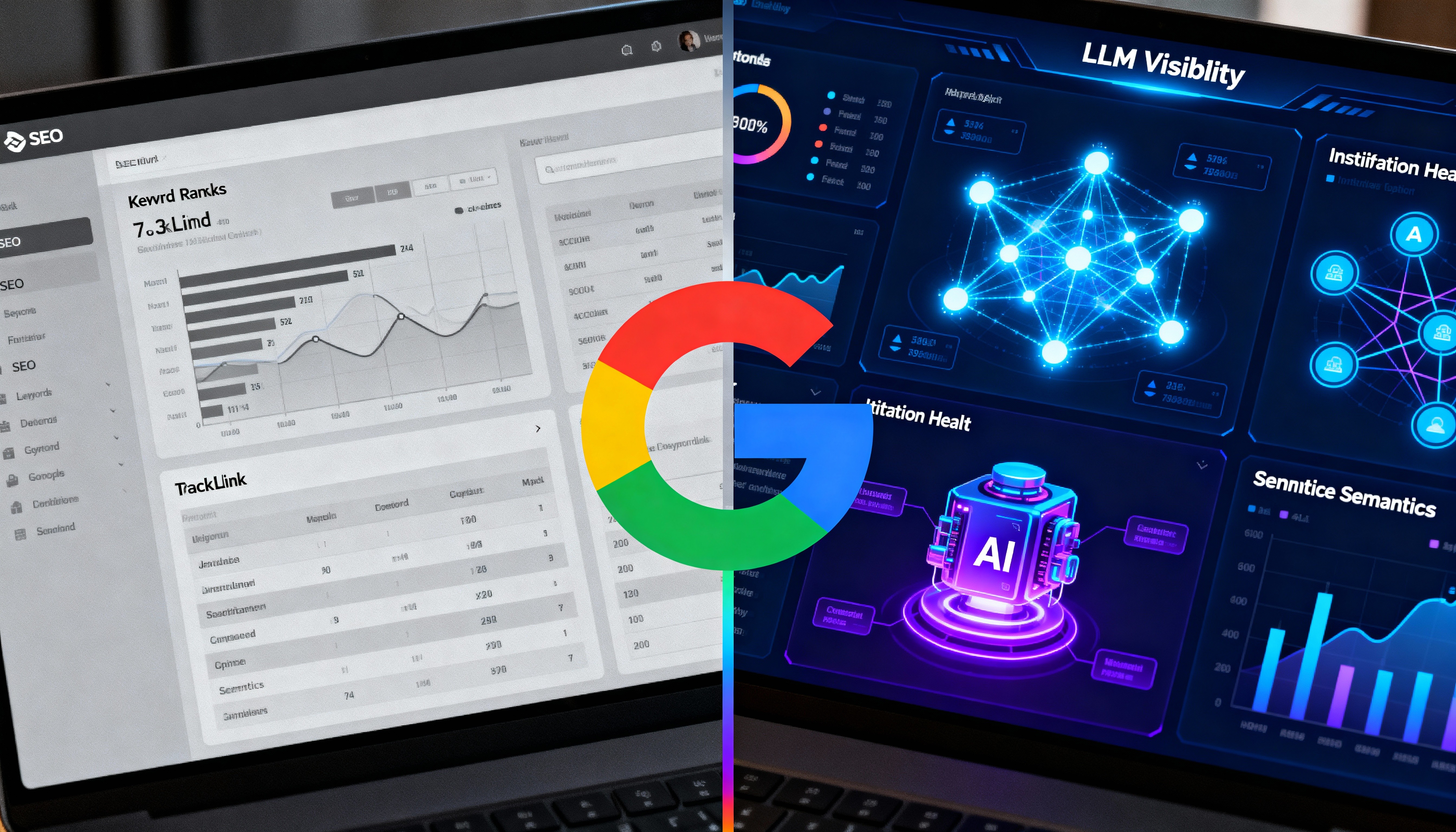
It's interesting because these AI models aren't pulling information out of thin air. They're remixing content that's already been optimized for search engines. If your content isn't showing up in these AI answers, it's likely because your brand wasn't visible or structured well enough in the first place. Basically, if your SEO was weak, your AI presence is probably even weaker. It means that just optimizing for traditional search might not be enough anymore.
AI As The Primary Information Gatekeeper
The way people find answers is changing. Instead of sifting through pages of search results, they're getting a single, summarized response from an AI. This means if you're not visible in that AI summary, you're essentially invisible to a growing number of users.
Here's a quick look at why traditional SEO alone is falling short:
Unclear Brand Positioning: If an AI can't easily categorize what you do, it won't include you. Think of it like trying to file a book without a clear genre.
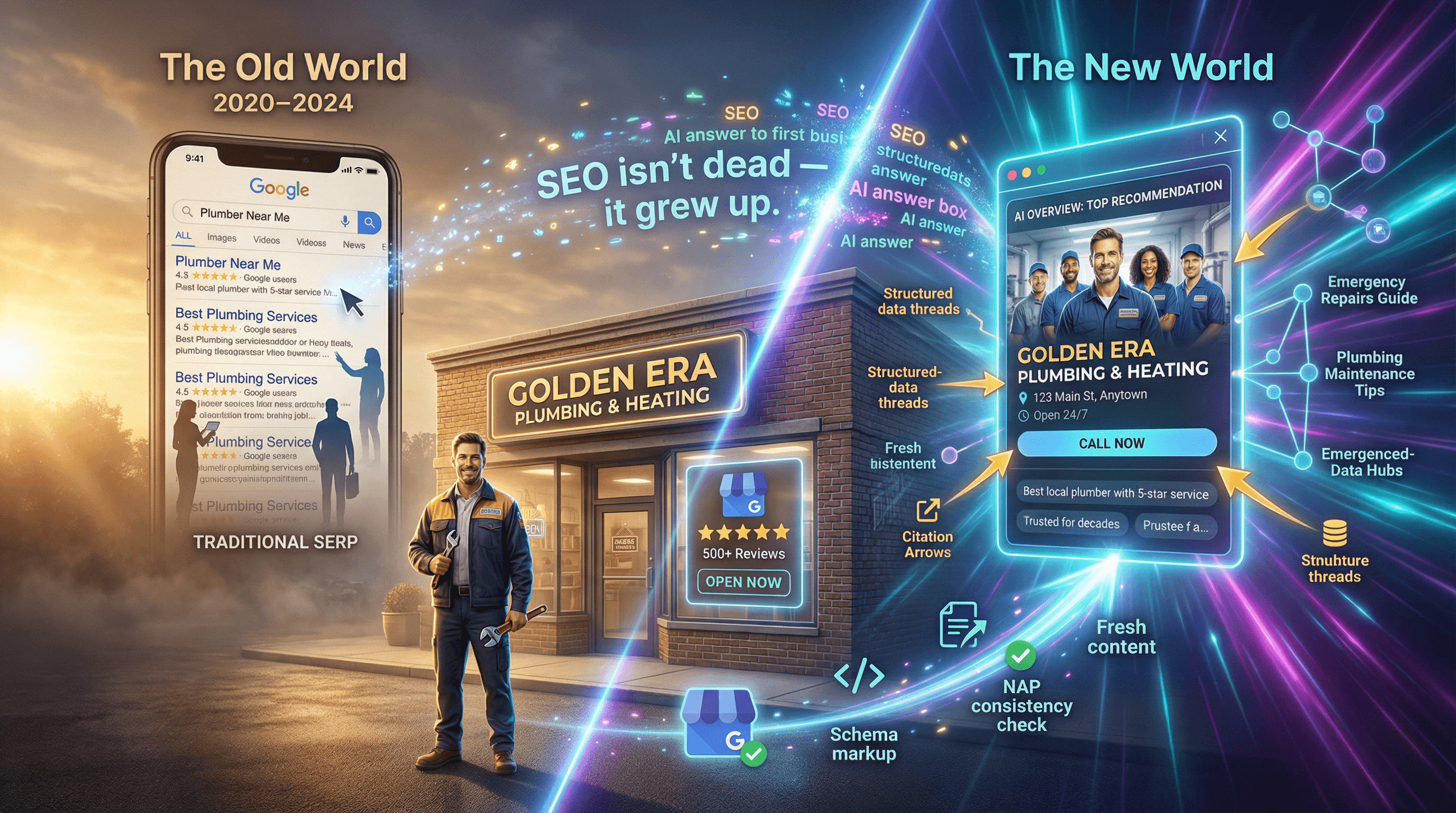
Lack of Structured Data: AI needs clear signals. Without things like schema markup, it's harder for AI to understand the specifics of your content.
Stale Information: AI models often pull from recent data. If your content isn't updated, you risk being overlooked in favor of fresher information.
Generality vs. Niche: AI tends to favor clear, authoritative voices in specific niches. Being too broad can make it hard for AI to pinpoint your relevance.
Understanding How AI Models Generate Answers
So, how do these AI chat tools actually come up with the answers they give us? It's not magic, though sometimes it feels like it. At its core, a large language model, or LLM, is trained on a massive amount of text data. Think of it like reading a huge chunk of the internet and every book ever written. This training allows it to learn patterns, grammar, facts, and how words usually follow each other. When you ask a question, it's essentially predicting the most likely sequence of words to form a coherent and relevant answer based on everything it has learned.
From Next-Word Prediction To RAG
Originally, these models were pretty much just fancy autocomplete. They'd predict the next word, then the next, and so on. This is called next-word prediction. It works surprisingly well for generating human-like text, but it has its limits, especially when it comes to factual accuracy or providing up-to-date information. To get around this, a technique called Retrieval-Augmented Generation (RAG) has become super important. RAG basically means the AI doesn't just rely on its internal training data. Before it answers, it can quickly search through external, up-to-date sources – like recent web pages or specific documents – and then use that information to generate a more accurate and relevant response. This is a big deal because it means the AI can access information that wasn't even part of its original training.
The Role Of Search In AI Summaries
When you ask an AI a question that requires current information, the RAG process kicks in. The AI system will perform a search behind the scenes, looking for the best information to answer your query. It's not just pulling random sentences; it's trying to find authoritative and relevant content. Then, it takes that retrieved information and synthesizes it into a summary or a direct answer. This is why the quality of the search results the AI finds is so important. If the underlying search pulls weak or outdated information, the AI's answer will suffer too. It's like asking someone to summarize a book they've only skimmed – the summary won't be great.
Why Fresh Data Is Crucial For AI Rankings
Think about it: if an AI is constantly pulling from old information, its answers will quickly become stale. This is a major challenge for AI models trying to rank or provide useful information. For an AI to be seen as reliable, especially in competitive areas, the data it uses needs to be fresh. This means the underlying search capabilities and the training data need regular updates. If a traditional SEO firm isn't thinking about how their content will be found and used by these AI systems, they're missing a huge piece of the puzzle. Content that isn't easily discoverable or understandable by AI search mechanisms will simply not appear in the AI's generated answers. It's a new layer of optimization that goes beyond just keywords. We're talking about making sure your content is structured and presented in a way that AI can easily process and trust. This is why having clear brand positioning for AI categorization is so important, as it helps the AI understand the context and authority of your information.
The AI doesn't 'know' things in the way humans do. It predicts based on patterns in data. When it seems to 'know' something new, it's often because it's accessing and processing recent information through methods like RAG, rather than recalling it from memory.
The Hidden Mechanics Of AI Content Ranking
So, how does your content actually get picked up and used by AI models like ChatGPT or Claude? It's not magic, and it's definitely not random. The dirty little secret is that AI is essentially remixing content that's already out there and performing well. Think of it like this: AI models don't know things in the human sense. They're trained on massive datasets, and when they generate an answer, they're pulling from and synthesizing information that has already been crawled, indexed, and, importantly, optimized for search engines. If your content isn't showing up in AI outputs, it's not because the AI is ignoring you; it's because your brand wasn't visible or credible enough in the first place to be pulled into the mix.
AI Remixes Existing Optimized Content
This is where traditional SEO fundamentals are still super important, maybe even more so. AI models rely heavily on the signals that search engines like Google use to determine authority and relevance. If your content ranks well on Google, it's a strong indicator to AI that your information is trustworthy and useful. AI can't guess; it needs to scan top-performing content to come up with generated responses. So, if your site is already optimized for search engines, you're already laying the groundwork for AI visibility. It's about making your content easy for AI to understand and trust, often by ensuring it's already recognized by established search platforms.
Visibility and Credibility In AI Outputs
Getting your content into AI summaries isn't just about keywords anymore. AI looks for clear brand positioning. If your brand isn't clearly defined or categorized, AI struggles to know where to place you. It's like trying to file a document without a clear label – it just gets lost. Structured data, like schema markup, also plays a big role. This helps AI "understand" your site's content and context more effectively. Without it, AI might just skip over your pages because it can't easily process the information. Think of it as giving AI a clear map to your valuable content.
The Impact Of Weak SEO On AI Presence
Here's the kicker: if your SEO is weak, your AI presence will be even weaker. Users aren't sifting through pages of results anymore; they're getting a single, synthesized answer. If your content isn't part of that answer, you're essentially invisible. This means that efforts put into traditional SEO aren't wasted; they're foundational. You need to build that strong base of optimized, credible content first. Without it, chasing AI-specific tactics is like building a house on sand. It's why focusing on the fundamentals, like creating in-depth, user-focused content and ensuring your site is technically sound, is still the best strategy. You can't serve AI if you're not serving search engines first. It's a hybrid approach: old-school wisdom layered with new-school tactics. You want to optimize for visibility, not just a rank position, because AI is increasingly becoming the primary gatekeeper for information.
The core idea is that AI models are not creating information from scratch. They are sophisticated aggregators and synthesizers of existing, high-quality content. Therefore, the strategies that make content visible and authoritative to search engines are the same ones that make it discoverable and usable by AI. Weak SEO doesn't just mean fewer clicks from Google; it means a significantly reduced chance of being featured in AI-generated answers, which are becoming the new default for many users.
Here's a breakdown of what AI looks for:
Clarity and Relevance: Does your content directly answer a user's query in a clear, concise way?
Authority and Trust: Is your brand and content recognized as a reliable source? This often comes from established search engine rankings and signals.
Structure and Comprehension: Is your content well-organized and easy for AI to parse, perhaps with the help of structured data?
Freshness: While AI remixes existing content, it also needs up-to-date information. Stale content can lead to AI pulling outdated answers or ignoring your site altogether.
It's a bit like how Claude's ranking factors are discussed – clarity, neutrality, and trusted citations are key. If your content meets these criteria and is already performing well in search, you're in a much better position to be included in AI responses.
Beyond Keywords: What AI Needs For Visibility
So, you've been told that keywords are king, right? For years, that's been the mantra of SEO. But with AI models like ChatGPT and Gemini now acting as the primary way people find information, the game has changed. It's not just about stuffing keywords anymore. AI looks for different signals to decide what information to present.
Clear Brand Positioning For AI Categorization
Think of AI as a super-organized librarian. It needs to know exactly what your brand is about so it can put you in the right section. If your messaging is all over the place, AI gets confused. It can't easily categorize you, and then it won't show you when someone asks a relevant question. You need to be crystal clear about your niche, your audience, and what makes you stand out. This isn't just for humans; it's for the algorithms too. Consistent branding across your website and other online presences helps AI understand your place in the digital world.
Structured Data For AI Comprehension
AI models are smart, but they still need help understanding the nitty-gritty details of your website. That's where structured data, like schema markup, comes in. It's like giving AI a cheat sheet, clearly labeling your content so it knows what's what. Without it, AI might just skim over your site, missing important information. It's about making your content legible to AI crawlers and search bots, ensuring they can properly index and understand your offerings.
Here's a simple breakdown of what structured data helps AI understand:
Products: Pricing, availability, reviews.
Services: What you offer, service areas, appointment booking.
Articles/Blog Posts: Author, publication date, topic.
Local Businesses: Address, phone number, opening hours.
Niche Expertise And Authority Matter
AI models are trained on vast amounts of data, and they're getting pretty good at spotting genuine expertise. If your content is too general, AI might pass it over in favor of sources that demonstrate deep knowledge in a specific area. Building authority in your niche is more important than ever. This means creating in-depth content that answers specific questions thoroughly and consistently. AI models use brand signals to build trust, and being a recognized authority in your field is a major signal. It's about showing AI that you're a reliable source of information, not just another website with some keywords.
The shift to AI-driven answers means that generic content gets lost. AI prioritizes depth and clarity, rewarding brands that clearly define their niche and consistently provide authoritative information. If you're not seen as an expert, AI won't feature you.
This is why optimizing your content for AI search and discovery is so important to maintain online visibility. It's not just about ranking on a search engine results page anymore; it's about being recognized and presented by AI as a credible answer.
The 5% Rule: Focusing On High-Impact AI Strategies

It’s a bit of a dirty secret in the SEO world: most of what we do doesn’t actually move the needle. Think about it – a tiny fraction of your pages probably drive the bulk of your traffic, right? The same idea is starting to apply to optimizing for AI. Instead of trying to do everything, we need to figure out what actually matters for AI visibility. This is about finding that 5% of effort that gives you 95% of the results.
Identifying The Most Effective AEO Tactics
So, what is that 5% for AI? We're still figuring it out, but based on what we've seen in SEO, it’s likely to be a few key areas. It’s not about chasing every new trend. It’s about focusing on the core things that make your content understandable and authoritative to AI models. This means creating new pages for topics AI is asking about but you haven't covered, and beefing up existing content to fill any gaps. Also, paying attention to how other sites are cited for topics you care about and finding ways to get similar mentions is a smart move. The goal is to be the clear, go-to answer.
Avoiding Wasted Efforts In AI Optimization
Many businesses get this wrong. They think adding more keywords or just having a website is enough. But AI needs more. If your brand isn't clearly positioned, AI gets confused about how to categorize you. If you don't use structured data, AI can't really 'read' your site properly. And if your content is old news, AI will pull outdated information, or worse, favor a competitor who's more current. Don't waste time on tactics that don't directly help AI understand and trust your content. It’s better to do a few things really well than many things poorly.
The Power Of Targeted Content Clusters
Think about how AI answers questions. It's not just pulling random facts; it's synthesizing information. To show up well, your content needs to be organized in a way that makes sense. This means creating clusters of content around specific topics. Instead of a single page, have a main page and several supporting pages that all link back to it, covering different angles of the same subject. This shows AI you're a serious authority on that topic. It’s about building a strong, interconnected web of information that AI can easily digest and present as a definitive answer. This structured approach is key for AI visibility.
The real challenge isn't just getting your content seen by AI, but getting it understood and trusted. AI models are essentially remixing existing, optimized content. If your content isn't being pulled into AI answers, it's likely because it wasn't visible, structured, or credible enough in the first place. Weak SEO directly translates to poor AI presence.
Here’s a quick look at what tends to work:
New Content Creation: Developing pages for topics AI is actively referencing but you haven't addressed.
Content Enhancement: Improving existing pages to fill information gaps and answer related questions more thoroughly.
Citation Strategy: Identifying influential citations for your topics and seeking similar mentions for your brand.
This focused approach helps ensure your efforts are directed where they'll have the most impact in the evolving AI landscape.
Navigating The New Landscape Of Ranked In AI
So, the way people find stuff online is changing, and it's happening fast. Remember when "just Google it" was the go-to phrase? Well, now it's more like "just ask the AI." Whether it's ChatGPT, Gemini, or Claude, these AI chat interfaces are becoming the new front door for information. They don't just give you a list of links anymore; they give you an answer, synthesized from all sorts of places. And the kicker? People tend to trust that single answer like it's gospel.
The Evolution Of AI Chat Interfaces
These AI tools are getting smarter, and their interfaces are evolving to feel more natural. Think less like a search bar and more like a conversation. They're designed to understand what you really mean, even if you don't type in perfect keywords. This means the way we interact with them is changing. We're asking more complex questions, expecting more nuanced responses, and getting them.
Leveraging AI For Business Growth
If people are asking AI instead of searching, then your business needs to be visible there. It's not enough to just rank on Google anymore. Your content needs to be picked up and used by these AI models to form their answers. This means focusing on clarity, authority, and making sure your information is easy for the AI to understand and trust. If your SEO is weak, your AI presence will be even weaker.
The Future Of Answer Engine Optimization
This is where "Answer Engine Optimization" (AEO) comes in. It's like SEO, but with a specific focus on getting your content featured in AI-generated answers. It's about building trust and authority so the AI models see you as a reliable source. This involves:
Clear Brand Positioning: AI needs to know what you're about to categorize you correctly.
Structured Data: Using things like schema markup helps AI understand your content's context.
Niche Expertise: AI favors sites that are clearly experts in a specific area.
Freshness: Outdated information won't cut it; AI needs current data.
The core idea is that AI models are essentially remixing content that already ranks well in traditional search. If your content isn't showing up in the top search results, it's unlikely to be pulled into an AI answer. So, while the interface is new, the underlying need for strong, optimized content remains. It's just that the stakes are higher now, with a single AI answer often replacing the need to click through multiple links.
Beware Of Misleading AI Optimization Claims
It feels like every other day, someone's popping up with a new "secret sauce" for getting your business noticed by AI chatbots. They promise the moon, talking about how their special methods will get you ranked number one in ChatGPT or Gemini. Honestly, it's getting a bit much. A lot of these claims sound impressive, but when you dig a little, they often fall apart.
The Danger Of Fake AI Case Studies
Watch out for those slick presentations showing massive jumps in "AI traffic." Many of these are either completely made up or use really questionable data. They might show a spike after they implemented something, but there's no real proof the AI itself caused it. It's easy to manipulate numbers or cherry-pick results to make it look like magic.
Many "AI traffic" case studies lack verifiable data.
They often confuse general website traffic increases with specific AI-driven visibility.
The methodologies used are rarely transparent.
Understanding Misattribution In AI Traffic
Here's the real kicker: AI models like ChatGPT or Claude don't send traffic in the same way Google does. When an AI answers a question, it's usually summarizing information it found. It's not typically sending users to your site unless it explicitly links out. So, when someone claims they're driving tons of traffic from AI, ask them how. If they can't show you direct, attributable referral traffic from AI platforms, be skeptical. It's more likely they're seeing a general lift in brand awareness or perhaps confusing AI-generated content on your own site with traffic from AI.
Absolute Versus Relative Performance Metrics
This is where things get really fuzzy. Some companies will show you how much your visibility improved relative to your previous performance. That sounds good, right? But what if your previous performance was practically zero? A 100% increase from one visitor to two visitors is technically a huge jump, but it doesn't mean much in the grand scheme of things. Always ask for absolute numbers. How many people are actually seeing your content through AI? What's the real-world impact?
The AI landscape is new, and many are trying to capitalize on the confusion. Don't fall for promises that sound too good to be true. Focus on building genuine authority and providing clear, structured information that AI models can actually use. That's the sustainable path, not chasing phantom rankings.
Here’s a quick way to think about it:
Ask for raw data: Don't accept percentages alone. Request actual visitor numbers or mentions.
Inquire about referral sources: How are they tracking traffic from the AI?
Seek transparency: Understand the exact methods they're using to claim AI success.
Compare to industry benchmarks: Is their claimed success realistic for your niche?
So, What's the Takeaway Here?
Look, the whole AI chat thing is changing how people find stuff online, no doubt about it. Traditional SEO folks might not be shouting it from the rooftops, but if your website isn't showing up in these AI answers, you're basically invisible. It's not just about keywords anymore; AI needs clear info, good structure, and fresh content to even consider you. The good news? It’s not some impossible puzzle. By focusing on what actually matters – the stuff that drives results, the real '5%' – you can get your site noticed by these new AI gatekeepers. Don't get bogged down in the technical fluff; concentrate on making your content clear, credible, and easy for AI to understand. That's how you win in this new landscape.
Frequently Asked Questions
What is 'Answer Engine Optimization' (AEO) and why is it important now?
Answer Engine Optimization, or AEO, is like the new Search Engine Optimization (SEO). Think of AI tools like ChatGPT, Gemini, and Claude as new ways people find information, almost like search engines themselves. Because these AI tools use information from the web to give answers, making sure your content is easily found and understood by them is super important for getting noticed online.
How do AI chatbots like ChatGPT create their answers?
These AI tools work by predicting the next word to form sentences, kind of like finishing your thoughts. More recently, they also use something called RAG, which means they first do a quick search for information and then use that to create a summary answer. This helps them use more up-to-date information, which is key for giving good answers.
Does having good SEO for Google still matter for AI answers?
Yes, but it's not enough on its own anymore. AI tools often pull information from content that already ranks well in Google. So, if your website is already good for Google searches, that's a great start. But you also need to make sure your content is clear, well-organized, and shows you're an expert in your topic so the AI can easily understand and use it.
What's the '5% Rule' in AEO?
The '5% Rule' is the idea that most of the effort put into SEO or AEO doesn't actually make a big difference. Only a small part, about 5%, of the strategies you use really drive the most results. So, instead of trying everything, it's smarter to focus your energy on those few high-impact strategies that are proven to work best for getting your content seen by AI.
How can businesses make sure their content is visible to AI?
To be seen by AI, your brand needs to be clearly positioned so the AI knows what you're about. Using structured data, like special codes on your website, helps AI understand your content better. Also, showing that you have deep knowledge and are a trusted source in your specific area is really important. Think about creating content that answers many related questions on a topic.
What should I watch out for when looking at AI optimization claims?
Be careful of companies making big promises about AI optimization. Some might show fake success stories or take credit for traffic increases that happened naturally because more people are just using AI. Always check if their results are real by testing things yourself and looking at how much your own efforts truly improved things, not just if overall AI usage went up.